
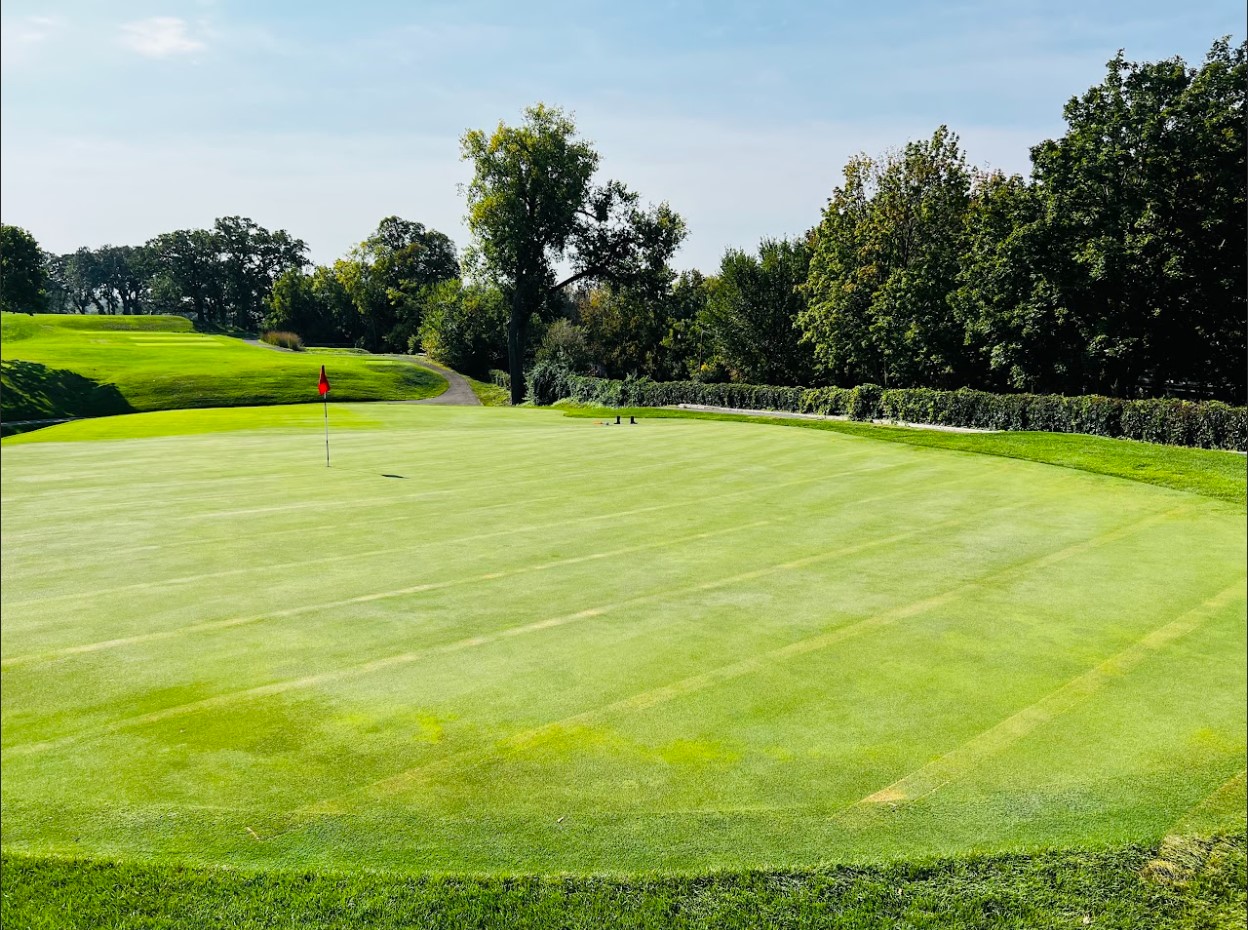
The Golf Green Drainage System That Firms Up Greens Without a Rebuild
Our golf green drainage system adds drainage to the greens you already have. Using the 2-inch slit process Mark Luckhardt developed more than 35 years ago, Turf Rehab installs narrow, sand-backfilled lines through the green so water leaves the rootzone fast, without stripping the turf or changing your contours.
Greens drainage
Why Greens Stop Draining
Greens take more abuse than any other surface on the course. They're mowed lower, rolled more often, walked on by every golfer and topdressed for decades. Even a green that drained well when it was built can turn soft and slow over time. Here are the most common reasons greens drainage fails.
Organic matter is the biggest one. Thatch and roots build up in the top 1 to 2 inches of the rootzone, and that spongy layer holds water like a towel. Water sits above it, the surface stays soft, and the roots stay shallow because there's no reason to go deeper.
Layering is close behind. Years of topdressing with sand that doesn't match the original rootzone, plus aerification holes filled with different materials, create layers that water has trouble crossing. Water perches on top of each layer instead of moving down.
Then there's how the green was built. Many older courses have push-up greens built on native soil, sometimes heavy clay, with little or no internal drainage. Some have drainage that has silted in or lost its outlet. Even well-built greens can suffer when surrounding slopes shed water onto the putting surface. Tight or compacted soils hold water longer, and greens get more compaction than anywhere else.
How Our Golf Green Drainage System Works
The idea is simple: give the water a short, fast path down and out, without tearing up the green to do it.
Narrow Trenches and Sand Backfill
We cut narrow trenches across the green in a layout based on its size, slopes and soil. A 2-inch micro-slit pipe goes in the bottom of each trench, and the trench is backfilled with sand so water can move straight down through it to the pipe.
The sand-filled trench cuts through the organic layer and any topdressing layers, so even a green with a sealed surface gets a direct route for water. Because the trenches are narrow, the turf on either side knits back over quickly.
What Happens During a Storm
When rain soaks the green, water builds up in the soil around each trench. Once that cavity reaches saturation, the micro-slits in the pipe activate and start drawing water into the line. As water leaves, pore space opens in the soil above, so the water sitting on and near the surface can move down instead of pooling.
During a heavy storm, a temporary water table forms near the surface of almost any green. Our system pulls that water table down quickly, then lets it rebuild at a healthier depth once the storm passes. The rootzone keeps the moisture your turf needs, but it isn't saturated at the surface where it causes soft greens, ball marks and disease pressure.
Tying Into Collectors Off the Green
Green lines empty into collector lines that run off the putting surface and through the surrounds to an existing drain, pond or outlet. If the green already has interior drainage that still works, we tie into it. If the outlet is blocked or missing, we fix that as part of the job, since green drainage is only as fast as the place it empties.
Results
What Superintendents See After Greens Drainage
Greens dry faster after rain and firm up sooner without becoming rock hard. That means fewer morning delays, fewer days with soft greens that take deep ball marks.
Below the surface, roots grow deeper because the rootzone isn't saturated. Deeper roots mean thicker turf, better color and greens that hold up through summer stress. Clubs that want firmer, faster greens can set them up that way without risking the turf.
Green speed gets easier to manage too. When every green on the course drains at about the same rate, firmness and speed stay consistent from hole to hole, and your crew isn't adjusting mowing and rolling schedules for the one green that never dries.
Superintendents also use the slit system to help flush salts out of greens.
A site visit turned into a full master drainage plan. Turf Rehab worked around the club's golf calendar, adjusted after severe weather and installed 2-inch drainage in the fairways.
Nick Roth Golf Course Superintendent, The Tree Farm (SC)
Over two falls of work at Portland, J.B. found the Turf Rehab staff professional, detailed and hardworking. Turf Rehab is now his first call for drainage.
J.B. Christie Golf Course Superintendent, Portland Country Club (ME)
A bunker removal project squeezed into a short, weather-affected window. Joel described the crew as tireless team players who planned the work carefully.
Joel Larsen Golf Course Superintendent, North Shore Country Club (WI)
Brian asked the crew back in November to install as much drainage on the property as possible.
Brian Bromann Ivanhoe Club (IL)
Which Greens Are Good Candidates for Slit Drainage
Most greens that drain poorly but still have good contours, healthy turf in dry weather and a surface golfers like are good candidates. A few types of greens benefit the most.
Push-up greens built on native soil are the classic example. They were shaped from whatever soil was on site, sometimes heavy clay, and many have little or no internal drainage. Slit lines give them the drainage they never had, without losing the contours that make older courses special.
Older USGA and California greens are often next. Even a green built to spec can develop layering and organic buildup after decades of topdressing and aerification. Water stops reaching the original drainage underneath, and the surface goes soft. Slit lines cut through those layers and restore a path down.
Greens in low spots, shaded pockets or below slopes are also common. They collect runoff from surrounds and dry slowly because they get less sun and air movement. Lines on the green and in the surrounds catch that water before it settles.
If you're not sure where your greens fit, we'll pull soil profiles and look at how each green was built. Soil type, whether heavy clay or sandy ground, drives how water moves and how the turf performs, and it tells us quickly whether slit drainage will solve the problem.
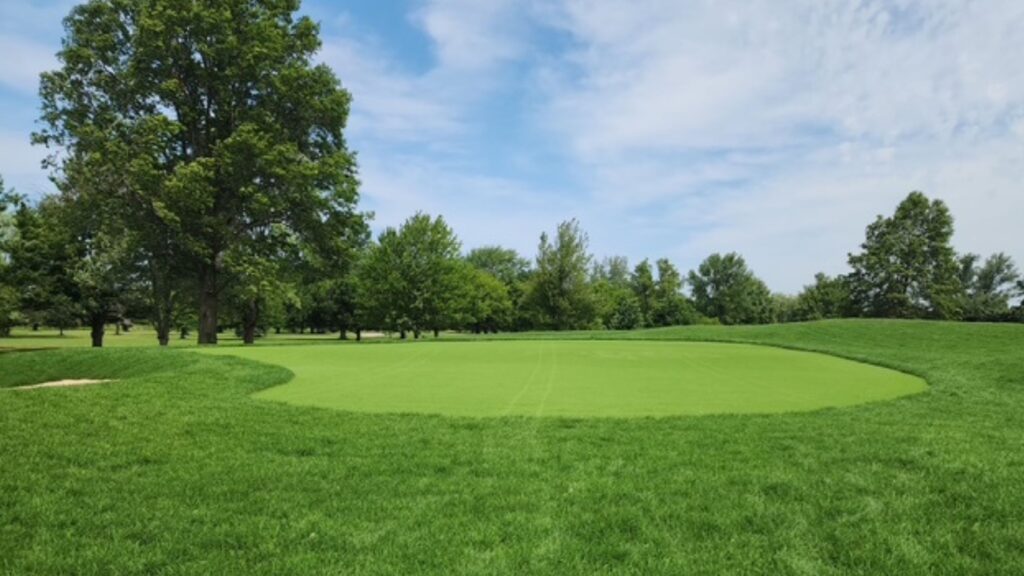
Slit Drainage vs. Rebuilding a Green
A full rebuild replaces the rootzone and drainage and starts the green over. It's the right answer when a green has failed contours, the wrong size, the wrong grass, or a rootzone that's beyond saving. It's also a big project. The green comes out of play for a full grow-in, and the cost is much higher.
Retrofitting a golf green drainage system keeps everything golfers like about the green: the contours, the turf and the character. You fix the drainage problem without starting over. For most greens that drain poorly but are otherwise sound, a slit retrofit is the faster and less expensive fix.
We do both. When a green needs a full rebuild, including an older USGA or California green, we rebuild it with our own method around 2-inch slit drainage. Our golf green construction page explains how we handle full builds. If you're not sure which one your greens need, we'll give you a straight answer after the site visit.
Installing Green Drainage Around Play
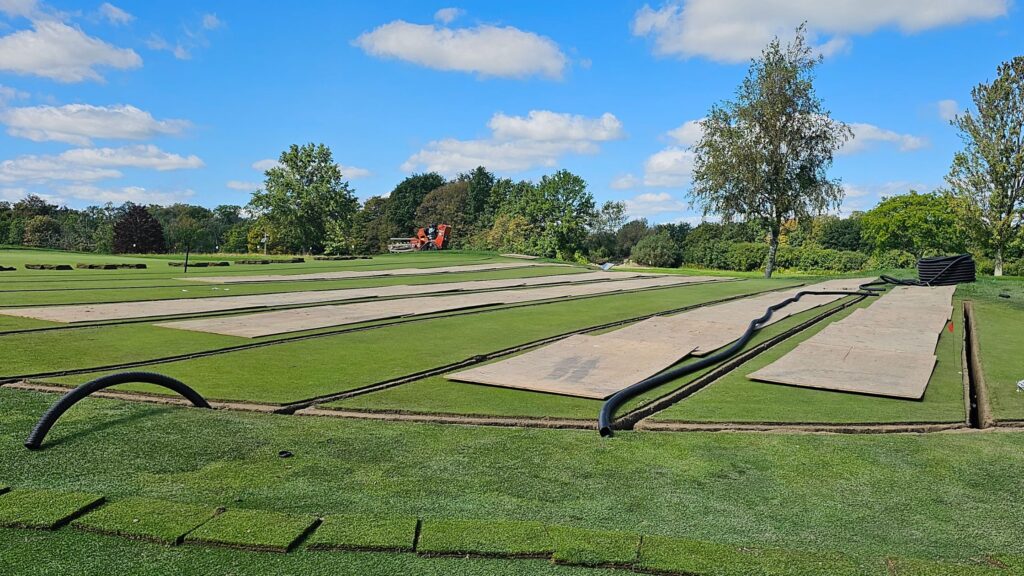
We know greens are the last place a club wants construction. We plan green drainage for spring and fall shoulder seasons when play is lighter and turf recovers quickly, and we work one green at a time so the rest of the course stays open. Trenches are backfilled and restored as we go.
Our crew protects the rest of the green while we work. Equipment stays on boards or turf protection where it has to cross the surface, spoil is kept off the putting surface, and every trench is cleaned up and topdressed before we leave for the day. Your crew isn't left with a mess to fix before the next morning's play.
We also schedule around aerification. Many clubs pair green drainage with their regular aerification window, since the green is already out of top condition for a short time and the two jobs recover together.
Greens Drainage as Part of the Full Course
Wet greens often have wet neighbors. Surrounds, collars and approaches can shed water onto the green or hold it right where golfers walk on and off. When we drain a green, we look at the whole complex and recommend lines for surrounds and approaches where they're needed.
For clubs that want to tackle drainage course-wide, greens are usually one phase of a larger plan. Our golf course drainage page covers fairways, bunkers and low areas, and our golf course drainage design service builds a GPS-mapped plan for the full course.
FAQs
Questions we hear most
For existing greens, slit drainage is usually the better choice because it adds drainage through narrow trenches without rebuilding the green. Conventional pipe drainage under a gravel layer is what you install when a green is being built or rebuilt from scratch.
Get in touch
Ask About Drainage for Your Greens
Tell us which greens stay soft, how they were built if you know, and what you see after rain. Photos of the greens, soil cores or problem spots help us prepare. We answer every request within 24 hours, and you can call any day from 8 AM to 6 PM at (518) 321-0630.
Location11 Ave A, Cambridge, NY 12816
Phone, every day 8 AM to 6 PM(518) 321-0630