
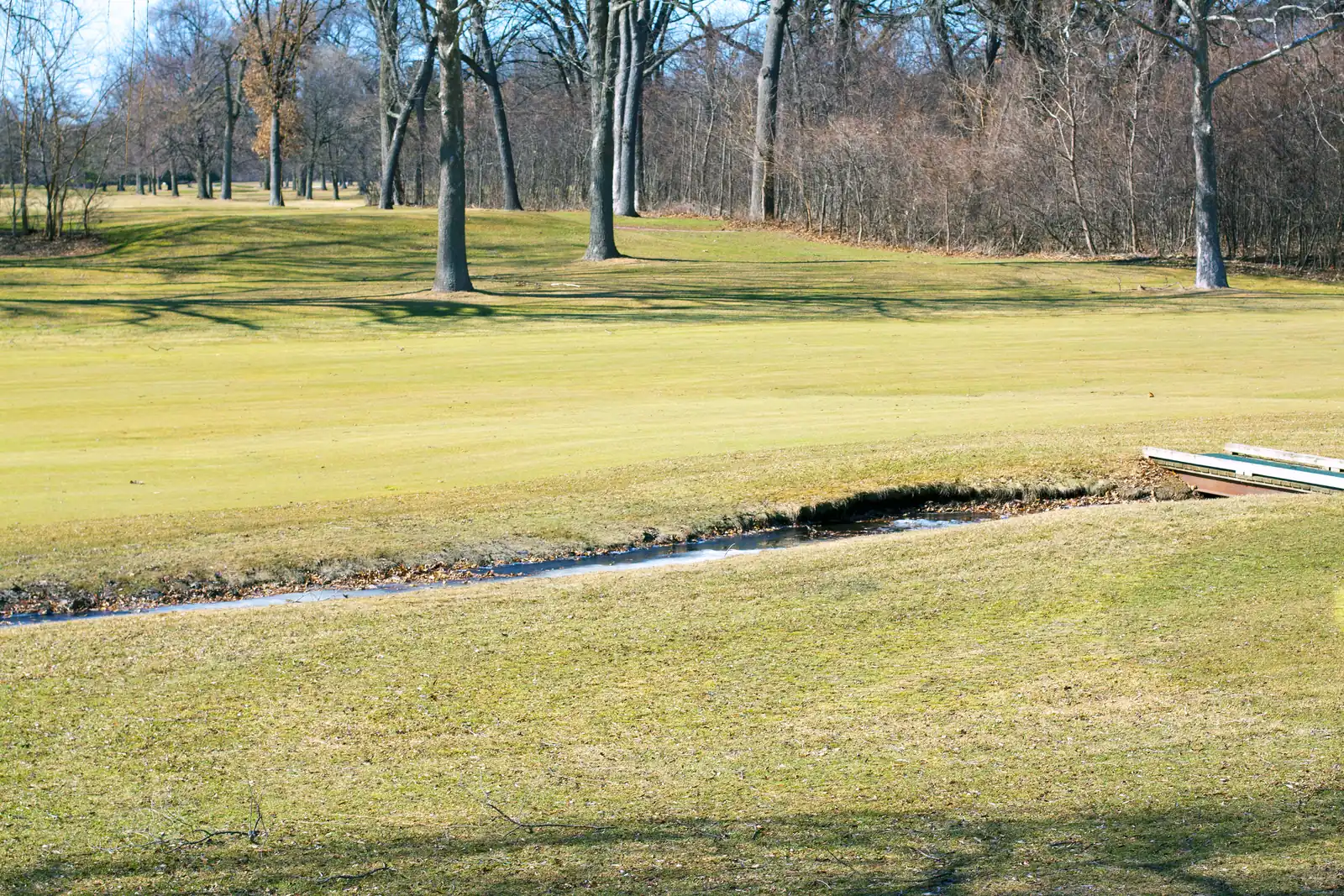
Golf Course Drainage That Gets Water Off the Surface
Turf Rehab installs golf course drainage on fairways, greens, bunkers, tees and low areas for private clubs, public courses and resorts. Our crew has worked at Oakmont Country Club, Chicago Golf Club, Milwaukee Country Club, North Shore Country Club and more than 70 other clubs across 16 states, using the 2-inch slit drainage process Mark Luckhardt developed more than 35 years ago.
Years combined experience
Years of 2" slit drainage
States served
Trusted on the ground at
Oakmont CCChicago GCPortland CCNorth Shore CCThe Tree FarmWayzata CCHyannisport ClubThe Apawamis ClubHuntingdon Valley CCWoodhill CCBiltmore Forest CCBryn Mawr CC
Drainage
Golf Course Drainage Installation From a Crew That Only Does Turf
Golf course drainage is the one thing we think about all day. When a fairway stays soft for three days after an inch of rain, or a green never firms up in spring, the problem almost always sits under the surface. Our job is getting water off the surface and out of the rootzone so your turf can breathe, your carts can go out, and your members stop asking why number 7 is closed again.
Turf Rehab is run by Mark Rowan, our President, who has spent 17 years in golf course construction and specializes in drainage system development, and Mark Luckhardt, our Turf Consultant, who developed our 2-inch slit drainage process. Between them they bring more than 50 years of fixing saturated turf on golf courses and athletic fields. Meet Mark Rowan
We do our own installation with our own crew and equipment built for golf courses. That matters more than it sounds. A general excavation contractor sees a trench. Our crew sees a fairway that has to be mowed tomorrow, a superintendent who needs to topdress next week, and a member-guest on the calendar for Saturday. We plan around all of it, and when severe weather throws the schedule off, we adjust fast instead of leaving open trenches across the course.
We work directly with golf course superintendents, golf course architects, owners and green committees. Some clubs bring us in for a single wet approach. Others hire us to build out a full master drainage plan over several seasons. Either way, you get the same crew and the same attention to detail, because you'll see the results every morning. Learn about Turf Rehab
Where Golf Course Drainage Problems Show Up
Water doesn't care where the architect put the hazards. It collects wherever the soil is tight, the grade is off by a few tenths, or an old drain line quit years ago. Here's where we install golf course drainage solutions most often and what each one fixes.

Fairways and Approaches
Wet fairways cost clubs more than any other drainage problem. They keep carts on the path, leave mower ruts, thin out the turf in the same spots every season, and make the course play longer and softer than it should. Approaches suffer the same way, and a soft approach in front of a firm green makes the whole hole feel wrong.
Fairway drainage moves water down and out of the profile so fairways dry sooner and stand up to cart and mower traffic. At The Tree Farm in South Carolina, we installed 2-inch drainage in the fairways as part of a master drainage plan. Superintendent Nick Roth says the fairways that used to be the wettest on the course are now the driest. In most cases fairway drainage can be added without tearing up the playing surface, which keeps the project affordable and keeps holes open.
Greens and Green Surrounds
Greens drainage pulls excess water out of the rootzone so greens firm up faster after rain and stay consistent through the season. Older push-up greens and greens built on heavy native soil are the usual suspects. Surrounds and collars often hold water too, especially where sprinkler overthrow and runoff from slopes meet.
We have a dedicated slit system for putting greens that adds drainage without rebuilding the green. You can read how it works on our golf green drainage system page. If a green is past the point of retrofitting, we also handle full rebuilds through golf green construction.
Bunkers
Bunkers that hold water after storms are a daily headache. Standing water under the sand, washouts on the faces, and silt and stone working up into clean sand all add labor hours your crew could spend elsewhere. We rebuild the drainage beneath bunkers so they handle storms better, keep sand cleaner and need fewer repairs.
Sometimes the right answer is reshaping or removing a bunker altogether. At North Shore Country Club in Wisconsin, our crew completed a bunker removal project on a timeline that weather squeezed down to almost nothing. Superintendent Joel Larsen called the work precisely planned and executed. See more on our bunker construction and renovation page.
Tees, Low Areas and Roughs
Tees that sit in low ground or were built with a flat or reverse grade hold water at the back and stay soft where golfers stand. Low pockets in roughs and along cart paths collect runoff from the rest of the hole and turn into mud by midsummer. Small grading errors create pockets where water collects, and tighter or compacted soils hold that water longer than sandy ground does.
For these areas we combine grading with subsurface lines so water sheds off the surface and has somewhere to go once it soaks in. For tees that need more than drainage, see tee construction and leveling.
How Our Golf Course Drainage Systems Work
Every course is different, so we don't install the same system everywhere. Most of our golf course drainage systems are built around the 2-inch slit process, with larger pipe and other methods added where the site needs them.

The 2-Inch Slit Drainage System
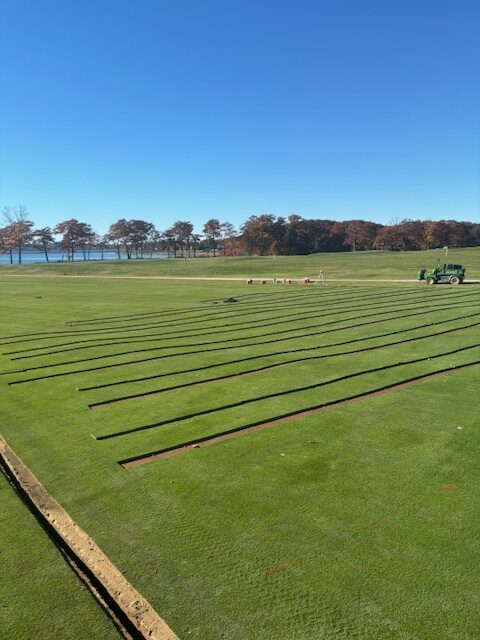
Mark Luckhardt developed this process more than 35 years ago, and it's still the core of how we drain golf turf. We cut a narrow trench, set a 2-inch micro-slit pipe in the bottom, and backfill the trench with sand so water can move straight down to the pipe.
Here's what makes it work. The micro-slits in the pipe open once the cavity around the pipe becomes saturated, and they start drawing water into the line. As that water leaves, it opens pore space in the soil above, so water sitting on the surface can move down instead of pooling. The temporary water table that builds up near the surface during a storm drops quickly, then settles back at a healthier depth once the storm passes. Your turf ends up with moisture where the roots can use it and air where the roots need it.
Because the trenches are narrow, the surface heals quickly and the lines don't leave wide scars across your fairways.
Collector Lines, Mains and Other Pipe Sizes
Slit lines have to empty somewhere. On most projects we tie the 2-inch lines into larger collector pipes that carry water to an existing drain system, a pond, a swale or a stable outfall. We also install conventional perforated pipe layouts, gravel or sand slit systems, and specialty strip drains when they fit the area better. If your course already has drainage that still works, we connect to it instead of replacing it.
Why Soil Type Changes the Layout
Heavy clay and sandy ground behave nothing alike. Clay holds water long after a storm and needs tighter line spacing to give water a short path to the pipe. Sandy soils move water on their own but can still have layers, buried organic matter or compacted zones that stop it. Slope matters too, since water running off a hillside lands in the flat at the bottom.
That's why line spacing and layout depend on soil, slope and how the area is used. A fairway landing area gets more traffic than a rough, and a green complex has different needs than a practice tee. We design each layout around your soils and your maintenance practices so your crew can still mow, topdress and aerify on schedule. When a club wants the whole course planned at once, we build that layout through our golf course drainage design service.
Results
What Changes After Drainage Goes In
The most common thing superintendents tell us after an install is that they stopped losing days. Puddles clear quickly. Surfaces firm up sooner after rain without going rock hard. Carts go back out hours earlier instead of the next afternoon.
The turf changes too. When roots don't sit in saturated soil, they grow deeper, and deeper roots mean thicker turf, better color and less turf loss after heavy rain. You'll see fewer soft spots, fewer ruts and less shearing where players make a hard turn or a cart pivots. Clubs that want firmer, faster conditions can finally set the course up that way because the ground can take it.
Superintendents also tell us the work holds up. Christie at Portland Country Club in Maine had our crew on site over two falls and called Turf Rehab one of the best contractors the club has worked with.
A site visit turned into a full master drainage plan. Turf Rehab worked around the club's golf calendar, adjusted after severe weather and installed 2-inch drainage in the fairways.
Nick Roth Golf Course Superintendent, The Tree Farm (SC)
Over two falls of work at Portland, J.B. found the Turf Rehab staff professional, detailed and hardworking. Turf Rehab is now his first call for drainage.
J.B. Christie Golf Course Superintendent, Portland Country Club (ME)
A bunker removal project squeezed into a short, weather-affected window. Joel described the crew as tireless team players who planned the work carefully.
Joel Larsen Golf Course Superintendent, North Shore Country Club (WI)
Brian asked the crew back in November to install as much drainage on the property as possible.
Brian Bromann Ivanhoe Club (IL)
Our process
Our Golf Course Drainage Process
Every project runs through the same six steps, whether it's one approach or a full course. You'll know what we found, what we plan to install, what it costs and when it will happen before any equipment shows up.
Site Visit and Assessment
We walk the holes with your superintendent. We look for the obvious wet spots, and also for the clues that point to them: places carts steer around, where shoes pick up mud, where turf thins out in the same shape every year, and where mowers leave tracks. If you need a deeper look at an older system first, our golf course drainage inspection covers that in detail.
Soil Profile Review
We pull soil profiles in the problem areas and compare them to areas that drain well. We check existing drainage, surface grades and how water moves across and through the site. This step tells us whether the problem is the soil, the grade, a failed line, or all three.
Layout and System Design
We design the drainage layout with GPS so every line has a precise location. The layout is built around how your crew maintains the course, so the lines don't get in the way of aerification, topdressing or irrigation work.
Cost Breakdown by Area
You get pricing broken out by area: each fairway, each green complex, each bunker group. That makes it easy to approve the worst areas first and phase the rest over the next few seasons as budget allows.
Installation
Our own crew installs the system, backfills the trenches, and restores the surface. We schedule around your events and tee sheet as much as the weather allows.
Final Inspection
We walk the finished work with your superintendent, confirm water is moving where it should, and make sure the surface is ready for play. You also get a GPS record of where every line went, which helps with future repairs and planning.
Working Around Play and the Golf Calendar
Nobody wants a drainage crew in the middle of a club championship. We plan installs around your calendar, and most of our golf work happens in spring and fall shoulder seasons when play is lighter and the ground is workable. Portland Country Club had us back two falls in a row. Ivanhoe Club asked for us in November.
The narrow trenches of the slit system help here too. Lines go in, the trench is backfilled and the surface is restored quickly, so holes come back into play sooner than they would after a wide pipe trench. When weather shrinks the window, our crew works harder to hit the date. That's exactly what happened on the bunker project at North Shore Country Club.

Golf Course Drainage for Private, Public and Resort Courses
We install golf course drainage for private and member clubs, public and municipal courses, and resort and destination courses. Our project list includes Oakmont Country Club and Manufacturers Country Club in Pennsylvania, The Apawamis Club and Blind Brook in New York, Wayzata and Woodhill in Minnesota, Chicago Golf Club and Hinsdale in Illinois, Biltmore Forest in North Carolina and The Tree Farm in South Carolina.
That experience across 16 states means we've drained heavy Midwestern clay, rocky New England ground and sandy Southern soils. Each one taught us something about how water moves, and we bring all of it to your course. See our project locations
FAQs
Questions we hear most
It depends on how many feet of line your course needs, the soil, and how far the water has to travel to an outlet. A single wet approach costs far less than a full fairway grid. We price every project by area after a site visit, so you can fix the worst spots first and phase the rest.
Get in touch
Request a Golf Course Drainage Project Review
Tell us which holes give you trouble and what you see after a storm. Send photos of the wet areas, soil conditions or problem spots if you have them. We answer every request within 24 hours and follow up with options that fit your course and your calendar. You can also call us any day from 8 AM to 6 PM at (518) 321-0630.
Location11 Ave A, Cambridge, NY 12816
Phone, every day 8 AM to 6 PM(518) 321-0630