

Golf Course Drainage Inspection: Find Out Why the Water Stays
A golf course drainage inspection tells you exactly why parts of your course stay wet before you spend a dollar on new pipe. Turf Rehab walks your holes with your superintendent, checks soils, existing lines and outlets, and gives you a plain explanation of what's wrong and how to fix it.
Inspection
What a Golf Course Drainage Inspection Covers
Most courses already have drainage. Some of it was installed when the course was built, some was added by a superintendent three jobs ago, and some nobody remembers putting in at all. When wet spots show up, the question isn't only "where do we need new drainage?" It's also "what happened to the drainage we already have?" A golf course drainage inspection answers both.
Our drainage inspection is an audit of four things. First, the existing drainage layout: where lines run, where they empty and whether they're still moving water. Second, the soil profile in the problem areas compared with areas that drain well. Third, moisture patterns across the course, meaning where water collects, how long it stays and which way it moves. Fourth, the specific problem areas your crew deals with every week.
We also check the pieces that tend to get forgotten: catch basins, outlets, pond inflows, the ends of old lines and the low ground where several holes shed water at once. A clean fairway line doesn't help if the outlet it empties into is buried under ten years of silt.
The result is a clear picture of what's wrong and what it will take to fix it, so your club can make decisions with real information instead of guesses.
Signs Your Golf Course Drainage Is Failing
If you're reading this page, you probably already know some part of your course doesn't drain the way it should. These are the signs we hear about most often, grouped by where they show up.
On Fairways and Approaches
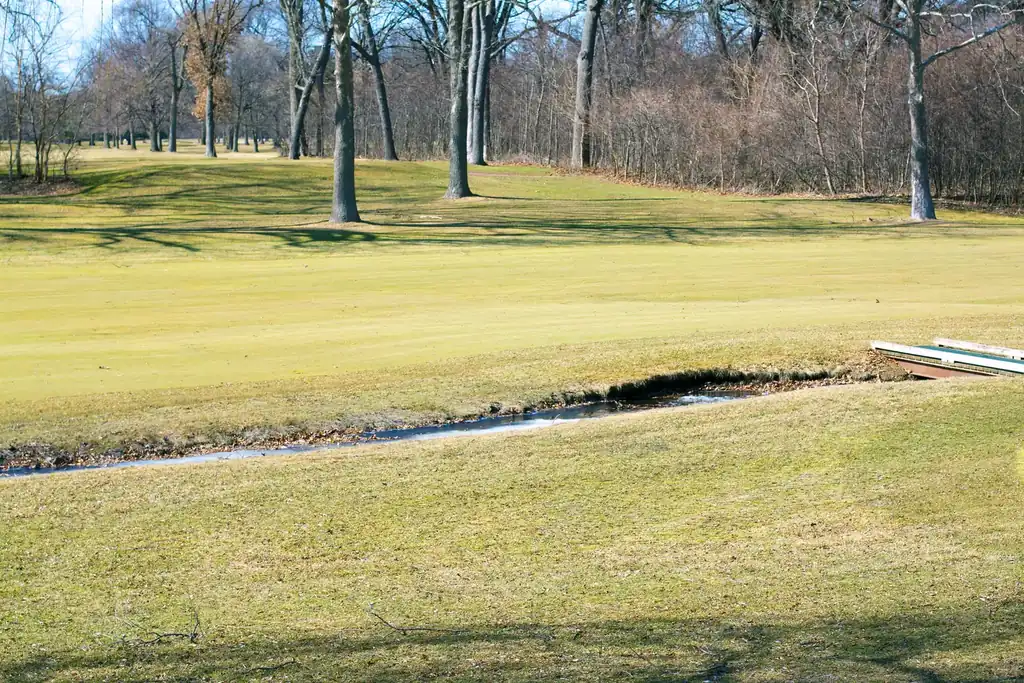
Soft or muddy areas that linger for days after rain are the most common sign, especially in fairway landing areas and approaches. If the same areas stay soft every time it rains, and the rest of the hole dries out fine, something below the surface is holding water there. Watch for turf that thins out in the same shape every season. That pattern usually traces the edge of a wet zone.
On Greens
Greens that stay damp in the morning, never fully firm up, or play noticeably softer than the green on the next hole often have a drainage problem in the rootzone. Older greens with layers of organic matter or topdressing that doesn't match the original mix are frequent offenders. If a green holds water after the rest of the course has dried, it's worth a closer look.
In Bunkers
Bunker washouts after storms, standing water under the sand, and chronic contamination where native soil and stone work up into the sand all point to bunker drainage that has failed or was never installed well. Your crew will tell you which bunkers eat the most labor after a rain.
In How Your Crew Works
Some of the best clues come from how your crew and golfers behave. Mower tracks in the same wet spots, crews routing equipment around certain areas after storms, carts that avoid the natural line on a hole, and golfers walking off with mud on their shoes all tell us where the ground can't take traffic. We pay close attention to these patterns during an inspection.
Why Old Golf Course Drainage Stops Working
Drainage that worked well for 20 years doesn't fail all at once. It usually slows down in stages until the wet areas look like they never had drainage at all. Here are the golf course drainage problems we find most often.
Sealed trenches are a big one. Over years of topdressing, thatch and organic matter build up in the top 1 to 2 inches of soil and can seal over the sand or gravel above a drain line. Water can't reach the pipe, so the line sits there dry while the turf above it stays wet.
Silted or crushed lines are another. Old clay tile and early plastic pipe can collapse under heavy equipment, fill with fine soil or get cut by irrigation work and never repaired. Blocked outlets back water up into every line that feeds them. Tree roots also work their way into old pipe that runs near trees.
The ground changes too. Cart paths get added, bunkers get moved and fill gets placed during small projects. Every change alters how water moves across the surface. Small grading errors create pockets where water collects. Tight or compacted soils hold water longer than the original design expected, especially on heavily trafficked holes.
How Our Drainage Inspection Works
An inspection covers the first two steps of our full process, done in more depth. Here's what a drain inspection at a country club looks like from start to finish.
Walking the Course With Your Superintendent
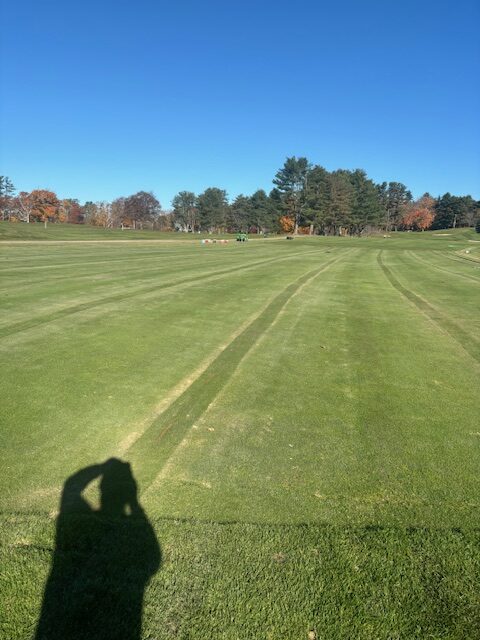
We start by walking the holes with your superintendent, because nobody knows your course's wet spots better. We look at the obvious problem areas and the less obvious clues: where carts steer off the usual line, where shoes pick up mud, where turf thins out each season and where mowers leave tracks. We ask about history too. When did the problem start? Did anything change nearby? Has anyone tried to fix it before?
Pulling Soil Profiles
In each problem area we pull soil profiles and compare them with nearby areas that drain well. A profile shows us layering, compaction, organic matter buildup, the depth of the rootzone and whether water is perched above a tight layer. Often the difference between a wet spot and a dry spot five yards away is plain to see once you look at the soil.
Locating and Checking Existing Lines and Outlets
We find existing drain lines and outlets, including ones that aren't on any map, and check whether they're still carrying water. We look at catch basins, cleanouts and outlet ends, and we note grades across the surface to see where water is supposed to go versus where it actually goes.
Mapping What We Find
Wet areas, existing lines, outlets and key features are recorded with GPS so you have a precise record of what's in the ground. That map becomes the starting point for any new design and saves you from paying anyone to rediscover the same lines later.
What You Get After the Inspection
After the inspection you get clear findings and a realistic correction plan. The findings explain what's causing water to stay in each problem area: soil, grade, failed lines, blocked outlets or a combination. The correction plan tells you what we'd recommend for each area and ranks the areas by priority, so the worst problems get fixed first.
Pricing is broken out by area. That lets your superintendent and green committee decide what to approve this season and what can wait. Many clubs use the inspection findings to build a multi-year capital plan.
When the club is ready to move forward, the findings go straight into our golf course drainage design process, where we lay out the new system with GPS and plan it in phases. If the fix is small and clear, we can go straight to golf course drainage installation.
Who Books a Drainage Inspection
Clubs call us for an inspection at a few predictable moments. A new superintendent wants to know what's actually under the course they just inherited. A green committee is building a capital budget and needs real numbers. A club is planning a renovation with a golf course architect and wants drainage figured out before new features go in. Or a wet season exposed problems that can't be ignored any longer.
We inspect private and member clubs, public and municipal courses, and resort courses. The inspection works the same way whether you have one wet approach or 18 holes of aging tile.

Results
Why Clubs Trust Turf Rehab to Diagnose Drainage
Diagnosing drainage takes experience you can't get from a textbook. Mark Rowan has spent 17 years in golf course construction with a focus on drainage system development. Mark Luckhardt developed the 2-inch slit drainage process more than 35 years ago. Together they've spent more than 50 years looking at saturated turf and figuring out why it won't dry.
Our work across 16 states means we've seen heavy clay in the Midwest, rocky ground in New England and sandy soils in the South.
A site visit turned into a full master drainage plan. Turf Rehab worked around the club's golf calendar, adjusted after severe weather and installed 2-inch drainage in the fairways.
Nick Roth Golf Course Superintendent, The Tree Farm (SC)
Over two falls of work at Portland, J.B. found the Turf Rehab staff professional, detailed and hardworking. Turf Rehab is now his first call for drainage.
J.B. Christie Golf Course Superintendent, Portland Country Club (ME)
A bunker removal project squeezed into a short, weather-affected window. Joel described the crew as tireless team players who planned the work carefully.
Joel Larsen Golf Course Superintendent, North Shore Country Club (WI)
Brian asked the crew back in November to install as much drainage on the property as possible.
Brian Bromann Ivanhoe Club (IL)
FAQs
Questions we hear most
We walk the course with your superintendent, pull soil profiles in problem areas, locate and check existing lines and outlets, and map what we find with GPS. You then get findings and a correction plan for each area.
Get in touch
Book a Golf Course Drainage Inspection
Tell us which holes are giving you trouble and what you see after a storm. Photos of wet areas, soil conditions or trouble spots help us prepare. We answer every request within 24 hours, and you can call us any day from 8 AM to 6 PM at (518) 321-0630.
Location11 Ave A, Cambridge, NY 12816
Phone, every day 8 AM to 6 PM(518) 321-0630