

How Does a Financial Literacy Speaker for Employees Change Your Workplace Culture?


A financial literacy speaker for employees changes your workplace culture by making money a topic people can talk about at work, and you can see it in the questions HR gets the following week. That’s the short answer. The long answer is what happens in the room, what happens after, and what to measure, and that’s this post.
I’m not a financial advisor. I’m a coach. For 16 years I’ve taught money inside NFL and NBA organizations and in front of employers, associations, and universities, and the thing that changes a culture isn’t the information. It’s the moment a room full of adults realizes nobody in it was taught this either. Information doesn’t change behavior. Belief does.
Why is your team’s money stress your business?
Your team’s money stress is your business because it comes to work every day, and it costs you hours before it costs you people. PwC’s 2026 Employee Financial Wellness Survey found 59 percent of employees are stressed about their finances right now. Fifty-three percent have less than $5,000 saved for an emergency, and 44 percent are putting necessities on a credit card because they can’t cover them otherwise.
That stress has a schedule. The 2026 TIAA Institute and GFLEC Personal Finance Index found the average worker spends about five hours a week dealing with personal money issues while at work. For the least financially literate workers, it’s eleven hours. That is more than a full workday, every week, spent on a problem nobody at work is allowed to mention.
Employers know it. Morgan Stanley’s 2026 State of the Workplace study found 56 percent of employees say financial stress hurts their work and personal life, and 80 percent of employers believe it’s hurting productivity. So the problem is on both sides of the desk. What’s missing is a way to talk about it that doesn’t feel like a performance review.

What does a financial literacy speaker for employees actually do in the room?
A financial literacy speaker for employees gets the room to do something in the first two minutes, because a room that participates is a room that changes. Here’s the sequence I run, whether it’s a conference general session or one of the sessions built for HR and benefits teams that happens in your own building.
- Everybody writes down their earliest money memory. Not a number. A memory. The room goes quiet, then it laughs, because half of them wrote down the same thing.
- Show of hands. Who has felt like they weren’t good enough because of what was in their bank account that month? Look at all those hands. That’s the moment the shame leaves the room, because now everybody knows everybody.
- True or false, fast. Ten money myths. The room answers out loud. The TIAA Institute and GFLEC index found U.S. adults answer only 47 percent of basic financial literacy questions correctly, and the room finds that out about itself in ninety seconds, together, without anyone being singled out.
- Live math with a volunteer. What’s your credit limit? Four thousand? Multiply it by 0.3. That’s the number you never go over. Now everyone in the room is doing it on their own card.
- Your benefits, by name. Before I walk in I’ve read your benefits summary. When I talk about saving, your 401(k) match is the example. When I talk about a medical bill, your HSA is the answer.
- One step, written down. Everyone leaves with one thing to do this week and the Train Your Money Starter Playbook to do it with.
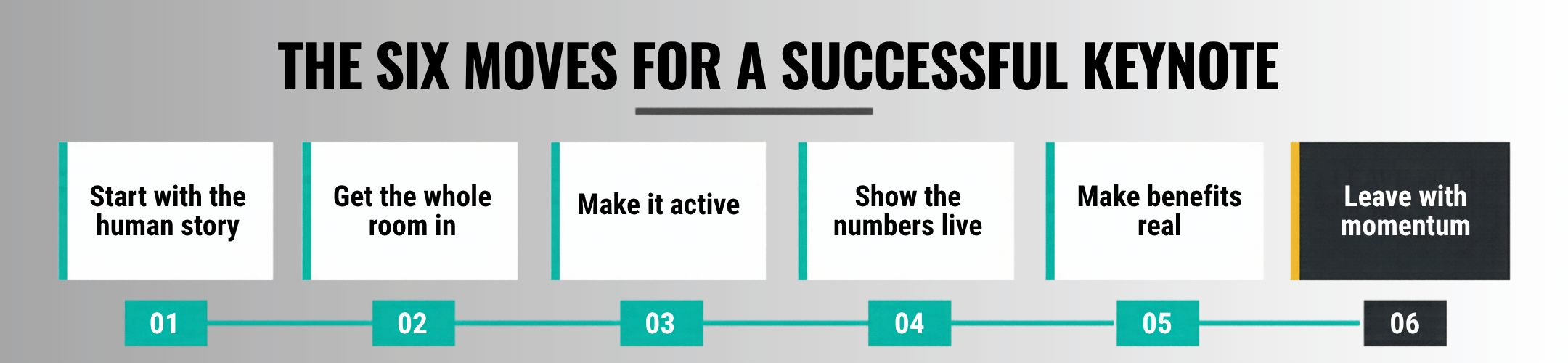
That’s the whole method: reps, not lectures. ATD Research found one-third of working Americans still prefer a live, instructor-led classroom to any other format, and for money I think that understates it. People don’t change how they handle money because a portal told them to. They change it when someone they trust does the math in front of them. The five keynotes are five different ways into that same room.
What changes in the culture after the session?
The culture changes when money stops being a secret, and you’ll hear it before you measure it. The week after a session, HR gets questions it never got before. Somebody asks how the match vests. Somebody asks whether the EAP covers a credit counselor. Two people compare notes on the 0.3 rule in the break room. None of that happened before, because before, admitting you didn’t know was the risk.
That’s the gap a speaker closes, and it’s a real gap. Bank of America’s 2026 Workplace Benefits Report found 71 percent of employers think their workforce is doing well financially. Only 55 percent of employees agree. Leaders assume the problem is smaller than it is because nobody tells them otherwise, and nobody tells them because it’s embarrassing. One session where the CEO sits in the front row and raises a hand with everyone else does more for that gap than a year of benefits emails.

It shows up in loyalty, too. The same Morgan Stanley study found 91 percent of employees would consider switching jobs for benefits that better help them reach their goals, and 85 percent would feel more invested in staying if they were offered tailored financial benefits. A live session is the most visible financial benefit you can offer, because everyone saw you offer it. Being the company that talked about money out loud is a differentiator your people can feel in the room, and the ones who were closest to leaving feel it first.
What changes in your benefits numbers?
Your benefits numbers change first, because a financial literacy speaker for employees turns the benefits you already pay for into part of a plan. This is where HR gets its proof.
Most companies have a communication problem, not a benefits problem. Morgan Stanley found 91 percent of HR leaders admit their company needs to do a better job helping employees understand and use their financial benefits. PwC found 53 percent of employees have less than $5,000 saved for an emergency, which means the emergency savings option you rolled out last year is exactly the benefit most of them need and never touched. HR knows the benefits are good. Employees don’t know what they’re for. A session four to six weeks before open enrollment is the fix, because the match, the HSA, and the EAP get explained by someone who isn’t selling any of them.
What you’ll see: more people contributing enough to capture the full match, HSA enrollment up at the next window, fewer hardship withdrawal requests, and the questions above landing in HR’s inbox instead of going unasked.
What should a financial literacy speaker never do?
A financial literacy speaker should never sell, never collect, and never talk down. If a speaker does any of the three, the culture change doesn’t happen, because the room stops trusting the person on stage.
Never sell. I don’t represent a financial product and I don’t take clients. That’s the reason a room will tell me things they’d never tell the person managing their money, and it’s the reason your compliance team can say yes.
Never collect. Nothing individual leaves the room. Money is private, and the show of hands only works because nobody writes down who raised one. Your team gets an Event Recap with participation, the themes the room raised, and what to do next. No names, no numbers.
Never talk down. Nobody in my sessions is made to feel behind. The burn rate math works the same for a new hire and a vice president, and a speaker who makes the highest earner in the room feel stupid loses the whole room. We learn about money backwards, all of us, and a good session says so out loud.
How do you know it worked?
You know a financial literacy speaker for employees worked when the behaviors move, and most of them move by the next open enrollment. Assess your baseline before the session, the same way I ask every room to assess theirs, or you won’t be able to see the change.
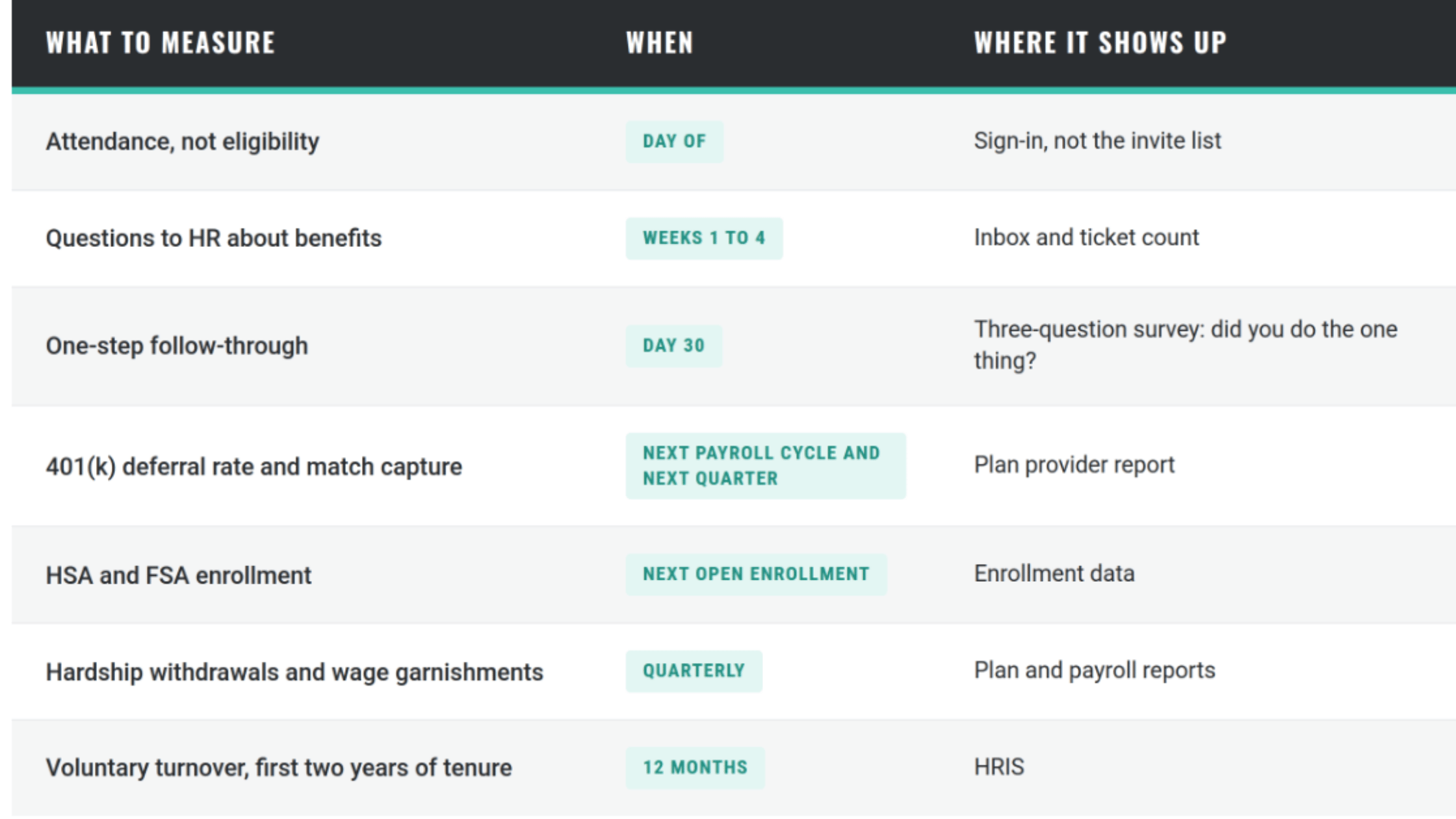
None of that requires a platform or a login. It requires a session that gives everyone one thing to do and a team that checks whether they did it. If you want the broader picture, start with financial education for employees.
Your people already know they should be doing better with money. Knowing was never the problem. A financial literacy speaker for employees gives them a room where it’s safe to say so, and one step to take before they leave it. Tell me about your team and your calendar, and Matt, my booking agent, will get back to you within one business day. Book Hillary.

Hillary Seiler is a financial wellness keynote speaker, FINRA Certified Financial Educator, and Senior Certified Credit Counselor. In 16 years she has taught money inside 15+ professional sports organizations and for 50+ employers, associations, and universities, and was named a Top 50 Financial Speaker in 2022 and 2023. She is the founder of Financial Footwork, the company behind her keynotes and workshops, holds a B.S. in Finance from Oregon State University, and is the author of the Amazon best-seller Train Your Money.
© Financial Footwork Inc. This material is for educational purposes only. Financial Footwork is not a financial advisor and does not provide financial advice.